


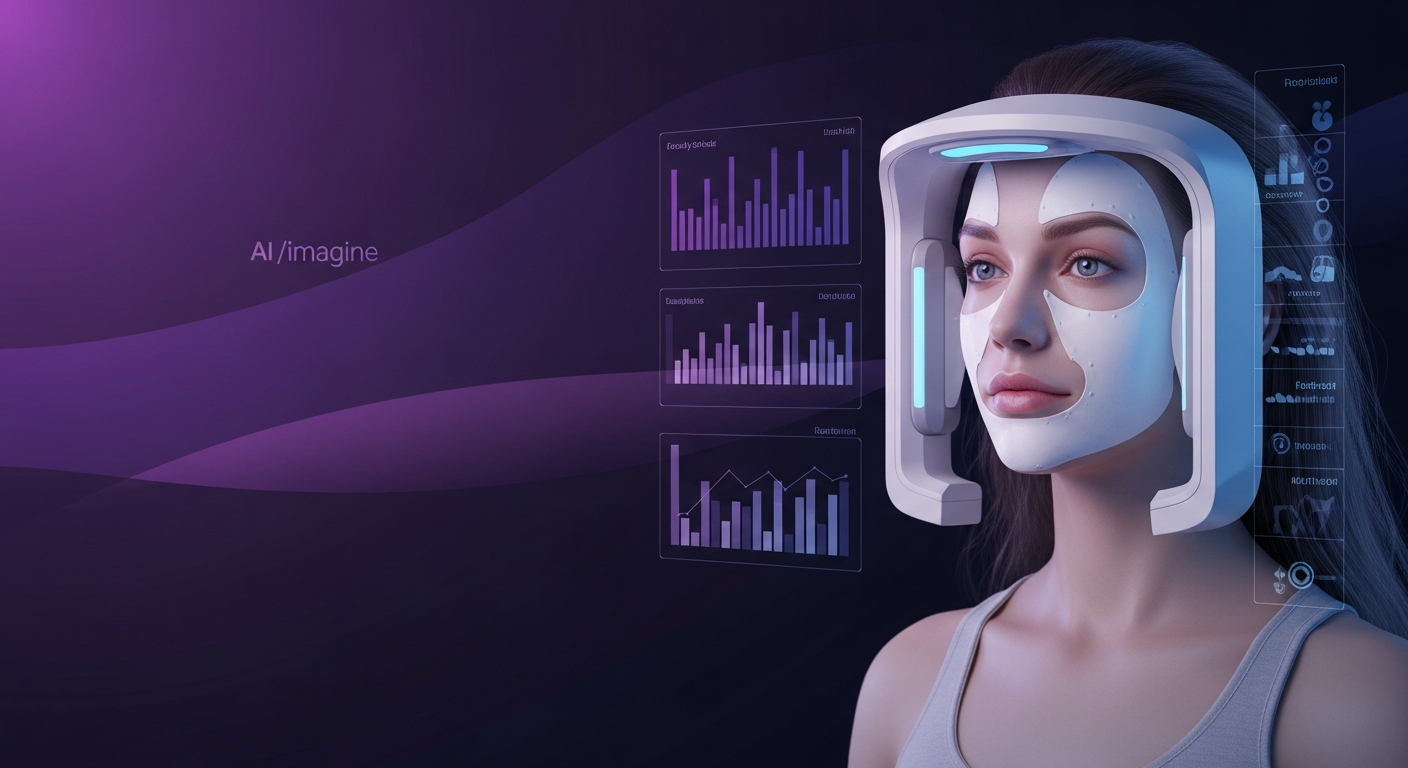
A face analyzer is an AI tool that scans your photo to reveal detailed information about your facial structure, proportions, symmetry, and even your face shape. Powered by computer vision and machine learning, modern face analysis technology has moved far beyond simple filters. Today, a quality face scanner can map over 60 landmarks on your face and deliver insights that once required an in-person consultation with an aesthetic specialist.
Whether you are curious about your facial analysis results, researching treatments, or simply exploring AI beauty tools, this guide covers everything a face analyzer can and cannot tell you. We also show you why the Bea app has become the go-to face scan tool for women who want accurate, personalized results.
Disclaimer: This article is for informational and entertainment purposes only. It does not constitute medical advice. Always consult a qualified healthcare professional before making decisions about cosmetic treatments.
A face analyzer uses artificial intelligence to examine a photograph of your face and extract meaningful data about your features. Unlike a simple beauty score, a thorough facial analysis breaks your face down into zones and evaluates each one individually: forehead, eyes, nose, cheeks, lips, jawline, and chin.
The technology behind a modern face scanner relies on deep learning models trained on millions of faces. These models learn to identify patterns in facial geometry that correlate with specific face shapes, proportional harmony, and structural characteristics.
When you upload a selfie to an AI face analyzer, the following steps happen in milliseconds:
A comprehensive face scan delivers far more than a single number. Here is what the best face shape AI tools can reveal:
| Feature | Basic Face Analyzers | Bea App |
|---|---|---|
| Face shape detection | Yes | Yes, with detailed subtype classification |
| Symmetry analysis | Basic left/right comparison | Advanced multi-zone symmetry mapping |
| Golden ratio scoring | Sometimes | Full phi-based analysis with visual overlay |
| Feature-by-feature breakdown | Limited | Comprehensive scoring for every facial zone |
| Treatment visualization | No | Yes, AI-powered before-and-after simulation |
| Face shape calculator | Basic categories | Detailed shape analysis with style recommendations |
| Privacy protection | Varies | On-device processing, photos never stored on servers |
The Bea app was built from the ground up to be the most comprehensive face analyzer available on mobile. It combines analyse facial technology with treatment visualization, making it the only tool you need to understand your face and explore aesthetic possibilities.
What sets Bea apart:
Download Bea and get your complete AI face analysis free
The quality of your face scan depends heavily on the input photo. Follow these guidelines for the most accurate facial analysis:
Try Bea's face scanner and see your features in a new light
No face analyzer can capture the full complexity of human attractiveness. These tools cannot assess your smile in motion, the warmth of your expression, your voice, or the way you carry yourself. They also cannot account for cultural context, personal style, or the intangible qualities that draw people to one another.
Use a face analyzer as one input among many. It is a powerful educational tool, not a final authority on beauty.
A face analyzer measures facial landmarks, distances between features, symmetry, proportions relative to the golden ratio, and face shape. Advanced tools like Bea also provide feature-by-feature scoring and treatment recommendations.
AI face analysis is highly accurate for measuring geometric properties like symmetry and proportions. However, attractiveness is subjective, so the scores should be viewed as one data point rather than a definitive assessment.
Privacy policies vary by app. The Bea app processes photos on-device and does not store your images on external servers, making it one of the most privacy-conscious options available.
Yes. Most AI face analyzers classify your face into categories such as oval, round, square, heart, diamond, oblong, or triangle based on the proportional relationships between your forehead, cheekbones, and jawline.
A beauty calculator typically produces a single attractiveness score, while a face analyzer provides a detailed breakdown of multiple facial features, your face shape, symmetry mapping, and often includes treatment suggestions. The Bea app combines both functionalities.
Other posts


