


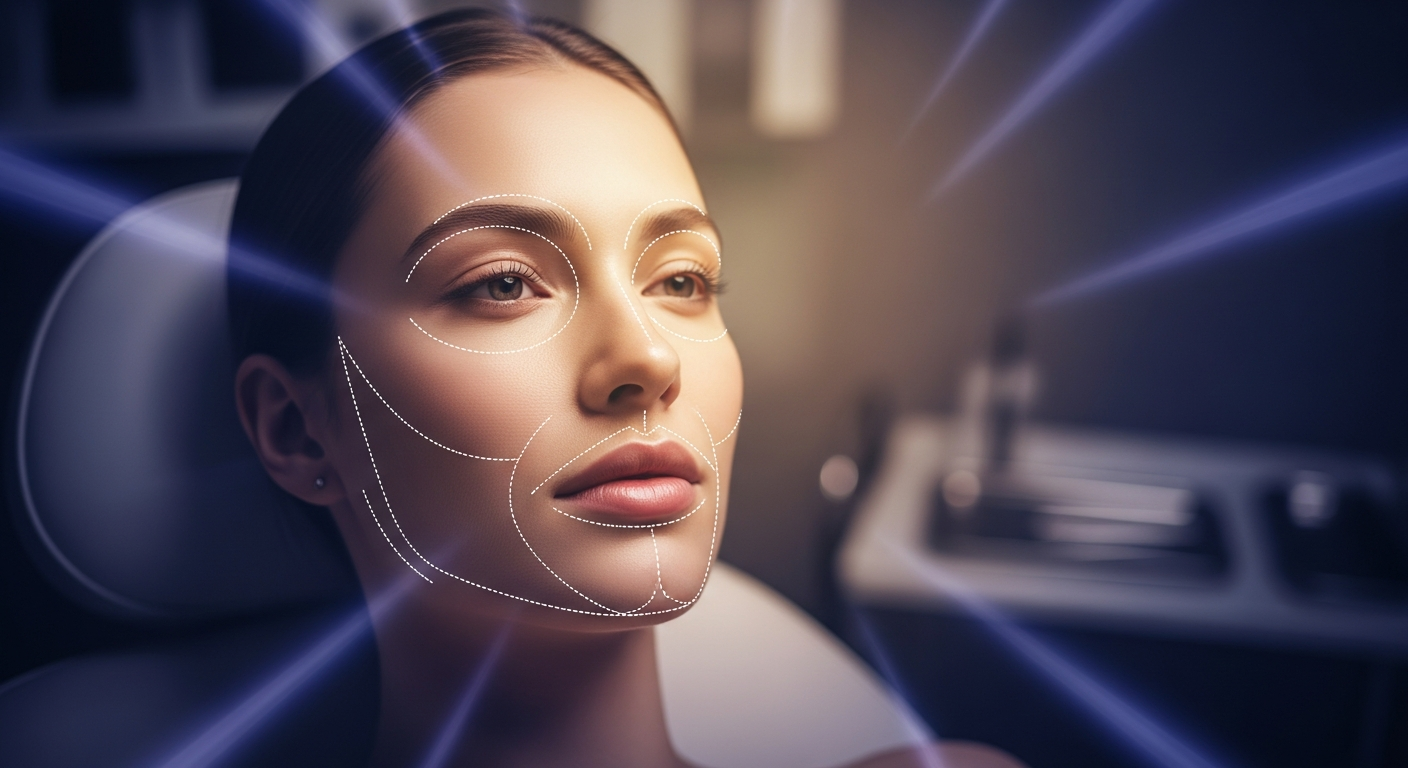
As we age, the lower face often shows signs of volume loss and sagging, leading many to explore fillers for jowls as a non-surgical solution. Jowl formation happens when skin laxity and fat descent create heaviness along the jawline, softening what was once a defined contour. The good news? Modern dermal filler techniques can address this concern with minimal downtime and impressive results.
If you've been researching fillers for jowls, you're not alone. Thousands of women seek jawline restoration each year, looking for ways to recapture a youthful lower face without going under the knife. In this comprehensive guide, we'll cover everything from how jowl fillers work to what you can expect during and after treatment.
Disclaimer: This article is for informational and entertainment purposes only and does not constitute medical advice. Always consult a qualified healthcare professional before pursuing any aesthetic treatment.
Jowls develop due to a combination of factors that accelerate with age. Understanding the root causes helps you appreciate why injectables for jowls can be so effective at restoring facial harmony.
Dermal fillers for jowls restore volume and structure to the lower face using injectable gel-like substances. Rather than simply filling the jowl area, skilled injectors use a strategic approach to lift and redefine the jawline.
The technique typically involves placing filler along the jawline itself to create a sharper border, while also addressing volume loss in the mid-face and chin. This multi-point approach to facial contouring creates a natural lifting effect that diminishes the appearance of jowling.
Not all fillers are created equal when it comes to treating jowls. The ideal product depends on your anatomy, the degree of sagging, and your aesthetic goals.
| Filler Type | Best For | Duration | Consistency |
|---|---|---|---|
| Hyaluronic Acid (HA) | Mild to moderate jowls | 12-18 months | Smooth, reversible |
| Calcium Hydroxylapatite | Moderate jowls, jawline definition | 12-18 months | Firm, structural |
| Poly-L-Lactic Acid | Gradual collagen stimulation | Up to 24 months | Biostimulatory |
| Polymethylmethacrylate | Permanent correction | Permanent | Semi-solid microspheres |
For most patients seeking jowl fillers, hyaluronic acid products with high G-prime (firmness) ratings are the gold standard because they provide structural support while remaining reversible.
Understanding what happens during a jawline filler appointment helps set realistic expectations.
The entire process typically takes 30 to 45 minutes. Most patients describe the sensation as mild pressure with minimal discomfort.
One of the biggest advantages of fillers for jowls is the immediate visible improvement. Here's what to expect:
| Timeframe | What to Expect |
|---|---|
| Immediately | Visible improvement, mild swelling |
| 1-2 weeks | Swelling resolves, filler settles into final position |
| 1 month | Optimal results visible |
| 6-12 months | Results maintained, touch-up may be considered |
| 12-18 months | Gradual filler metabolism, maintenance session recommended |
While dermal fillers for jowls offer excellent results for many patients, it's helpful to understand how they compare to other options for facial rejuvenation.
| Treatment | Invasiveness | Downtime | Results Duration | Best For |
|---|---|---|---|---|
| Jowl Fillers | Minimally invasive | 1-3 days | 12-18 months | Mild to moderate jowls |
| Thread Lift | Minimally invasive | 3-7 days | 12-18 months | Moderate laxity |
| Ultherapy | Non-invasive | None | 12-24 months | Mild laxity, skin tightening |
| Facelift Surgery | Surgical | 2-4 weeks | 5-10 years | Significant sagging |
Many women find that combining jawline filler with other non-surgical treatments, such as skin tightening or dermal fillers in complementary areas, delivers the most harmonious results.
The best candidates for jowl fillers typically share these characteristics:
If you're considering this treatment, the first step is a thorough consultation. Want to get a preview of how a more defined jawline might look on you? Check out the jawline filler guide or explore before-and-after possibilities with the jaw filler before and after gallery.
One of the most empowering steps in your treatment journey is being able to see potential results before committing. The Bea Aesthetic AI app lets you visualize how fillers for jowls and other facial contouring treatments might enhance your natural features.
Using advanced AI technology, Bea analyzes your facial proportions and simulates treatment outcomes so you can make informed decisions with confidence.
Download Bea on the App Store and explore your jawline transformation possibilities today.
The cost of jowl fillers typically ranges from $1,200 to $3,000 per session, depending on the amount of product needed, the type of filler used, and your provider's experience and location. Most patients require 2 to 4 syringes for optimal results.
Most patients report only mild discomfort during treatment. Providers use topical numbing cream and many modern fillers contain lidocaine, making the procedure very tolerable. Some areas along the jawline may be more sensitive than others.
Depending on the filler type and your metabolism, results typically last 12 to 18 months. Hyaluronic acid fillers in the jawline area tend to last longer than in more mobile areas of the face because the jawline experiences less movement.
Fillers can significantly improve the appearance of mild to moderate jowls by restoring volume and redefining the jawline. However, for severe sagging with significant skin excess, surgical intervention may be more appropriate. A skilled provider can advise on the best approach for your specific situation.
Common side effects include temporary swelling, bruising, and tenderness at injection sites. Rare but more serious risks include vascular occlusion, infection, and asymmetry. Choosing a board-certified provider experienced in dermal fillers significantly reduces these risks.
Ready to explore how jawline treatments could work for your unique features? Try the Bea app to visualize your potential results with AI-powered simulations.
Other posts


